
Mae Questel
Filed under: People, Voice Actor, 1920s, 1930s, 1940s, 1950s, Betty Boop, Betty Boop series, Early Sound, Inkwell / Fleischer Studios, Mae Questel, Popeye, U.S.A.,
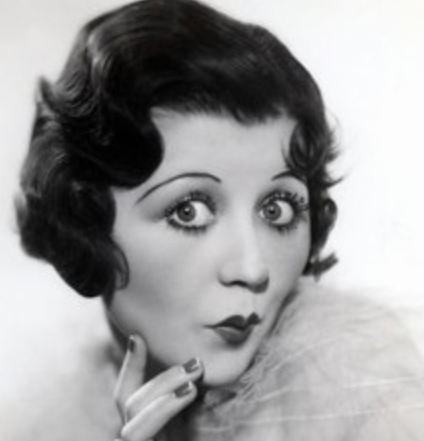 Full Name:
Questel Mae
Occupation / Title:Date of birth:13/09/1908
Date of death:04/01/1989
Birthplace:New York, USA
Associated studios:Biography
Mae Questel (neé Kwestel) was an American voice actress who is known for her work with the Fleisher cartoon studio. She is best known for voicing the characters Betty Boop and Olive Oyl. (Taylor 2017)
Family and early life
Mae Kwestel was born September 13, 1908, in the Bronx, NY. She was raised by her Orthodox Jewish parents, Simon Kwestel and Frieda (Glauberman) Kwestel. (Voice of Betty, 2017; Benjaminson, 2024; Mae Questel Biography, IMDb) Both parents were born in Russia and were of Russian Jewish heritage. (Voice of Betty, 2017)
According to her family, Kwestel was a natural “ham” who performed frequently at charitable and community functions in her youth. (Voice of Betty, 2017; Lederer, 1998) By 1916, she performed at Carnegie Hall and Town Hall. In 1922, Kwestel began her studies at Morris High School in the Bronx and graduated by the time she was seventeen. (Voice of Betty, 2017; Lederer, 1998, Benjaminson, 2024)
During her time at Morris High, Kwestel attended the Theatre Guild School where she studied dancing, singing, and dramatics. (Voice of Betty, 2017) There her teacher, Joseph G. Geiger, changed her name to Questel. The name stuck, and Questel would continue to use it throughout her career. According to Taylor, in a 1989 interview, Questel stated “[The name change] was okay by me. You know he gave Sylvia Sidney her start too.” (2017) According to the Mae Questel Biography on IMDb and Peter Benjaminson’s book, The Life and Times of Betty Boop (2024), Questel also studied drama at Columbia University and belonged to the American Theatre Wing. (Na; 2024) However, Taylor states that the Office of the Registrar at Columbia University informed him that her name, and variations of her name, do not appear in records of the period. (2017)
Despite Questel’s persistence, her family was against an entertainment career, and her parents and grandparents forced her to leave the Theatre Guild school while she was still a teenager. (Voice of Betty, 201: Lederer, 1998) Taylor even suggests that Questel’s family had their wills drawn up in a way that would discourage an acting career choice. (2017)
Career outline
With her family’s encouragement, Questel started teaching elocution at her parents’ house after graduating. (Voice of Betty, 2017; Lederer, 1998; Benjaminson, 2024) While she was teaching, her friends entered Questel into a local Helen Kane impersonation contest. Kane was a popular singer known as the “Boop-Oop-A-Doop Queen.” (Taylor, Voice of Betty, 2017; Pointer, 2017; Benjaminson, 2024) Questel won first place, receiving $100 in gold from Helen Kane and four days’ booking at the RKO (Radio Keith Orpheum) Theater. Her act at the RKO was titled “Mae Questel – Personality Singer of Personality Songs,” and included impersonations of other celebrities, such as Eddie Cantor, Ruth Etting, and Maurice Chevalier. (Taylor, Voice of Betty, 2017; Lederer, 1998) Questel’s voice caught the attention of Max Fleischer and he promptly hired her as a voice actor after hearing her during one of her shows. (Taylor, Voice of Betty, 2017)
At the time, Fleischer was looking for a voice for a new character his studio was developing. The character was designed to compete with Disney’s Mickey and Minnie Mouse by giving Fleischer’s “Mickey,” Bimbo the dog, a girlfriend. Richard Fleischer mentions in his book Out of the Inkwell (2005) that his dad found the perfect voice for Betty Boop with Mae Questel in 1931. (Pointer, 2017) Questel voiced Betty alongside other actors such as Margie Hines, Bonnie Poe, and Little Ann Little. (Taylor, Voice of Betty, 2017; Benjaminson, 2024; Pointer, 2017) In addition to Betty, Questel was also known for voicing Popeye’s girlfriend, Olive Oyl, Swee’Pea, Little Audrey and various other supporting characters. (Taylor 2017, Lederer, 1998) Questel also filled in to voice Popeye when his voice actor, Jack Mercer, was serving in World War II. (Taylor, Voice of Betty, 2017; Benjaminson, 2024)
In 1939 Fleisher Studios moved to Miami; Questel declined the offer to move with the studio. (Taylor, Voice of Betty, 2017; Benjaminson, 2024; Pointer, 2017) According to Taylor and Pointer, after Questel’s decision to stay in New York, the brothers terminated Betty Boops’ cartoon career. (2016; 2017)
Initially, Betty Boop had a more dog-like appearance, with a canine nose and dog ears. Slowly, her canine features were erased in the pursuit of creating a sexualized ideal of femininity. Before the Hays Code took effect in 1934, Betty was popular and a big revenue point for Fleisher studios. (Voice of Betty, 2017; Pointer, 2017)
In 1932, Helen Kane filed a lawsuit against Max Fleischer and Paramount Publix Corporation for $250,000. She filed the lawsuit on the grounds that her caricature had been taken without consultation and that it was causing her to lose profits. (Helen Kane, 2016) The Lower Court of New York ruled in favor of the defendant; the case was appealed and went to the Supreme Court in 1934. Alongside Margie Hines, Little Ann Little and Bonnie Poe, Mae was brought in to testify. Questel stated that although she was inspired by Kane’s performance, she added to it in ways that made her performance go beyond that of which belonged to Kane. (Helen Kane, 2016)
It was also revealed through a testimony by Lou Bolton, that Kane likely took inspiration from his client, the African-American child performer Esther Jones. Miss Jones was known for performing an original act where she would use a pitched-up baby voice and scat phrases such as “Boo-Boo-Boo,” “Wha-Da-Da,” and “Doo-Doo-Doo.” (Helen Kane, 2016)
Taylor indicates that in 1934, Judge McGoldrick ruled for the defendants, saying that the “baby” technique of singing did not originate with Miss Kane. (2016) In the aftermath, the Fleischers created Betty Boop’s Trial, (1934). They also filmed Don’t Take Our Boop-Oop-a-Doop Away in 1934, which featured the voice actors of Betty who stood on trial. (Pointer, 2017; Helen Kane, 2016)
References:
Benjaminson, Peter (2024). The Life and Times of Betty Boop: The 100-Year History of an Animated Icon. Applause Theatre & Cinema Books, an imprint of Globe Pequot, the trade division of The Rowman & Littlefield Publishing Group, Inc.
Nash, Eric P. “The Lives They Lived: Mae Questel; A Squeak for the Ages.” The New York Times Magazine, 3 Jan. 1999, https://web.archive.org/web/20170915144715/http://www.nytimes.com/1999/01/03/magazine/the-lives-they-lived-mae-questel-a-squeak-for-the-ages.html.
Taylor, J. D. (2016). The Voice of Betty Boop, Mae Questel. Algora Publishing.
Taylor, J. D. (2017) Helen Kane and Betty Boop : On Stage and on Trial. Algora Publishing, 2017.
“Actress Mae Questel Dies.” The Pittsburgh Post-Gazette, 9 Jan. 1998, https://news.google.com/newspapers?nid=1129&dat=19980109&id=JbFRAAAAIBAJ&sjid=Km8DAAAAIBAJ&pg=6412,5174896&hl=en.
“Actress Mae Questel Dies.” The Washington Post, 9 Jan. 1998,https://www.washingtonpost.com/archive/local/1998/01/09/actress-mae-questel-dies/253054f3-770f-48d5-a151-3e5f9c41c49b/.
Vincent Alexander. (2025)“Here Are Some of Betty Boop’s Greatest Moments.” Cartoon Brew.https://www.cartoonbrew.com/classic/here-are-some-of-betty-boops-greatest-moments-247681.html.
“Mae Questel Biography.” IMDb, https://www.imdb.com/name/nm0703362/bio/.
Lederer, J. Andrew. (1988) “Mae Questel: A Reminiscence, History and Perspective.” Animation World Network, https://www.awn.com/animationworld/mae-questela-reminiscence-history-and-perspective.
“Mae Questel Dies at 89.” Variety, 1998, https://variety.com/1998/film/news/mae-questel-dies-at-89-1117468010/.
“Max Fleischer.” Rarebit, https://rarebit.org/?people=max-fleischer.
Fleischer, Richard. (2005). Out of the Inkwell (Lexington: University Press of Kentucky).
Pointer, Ray. “The Art and Inventions of Max Fleischer American Animation Pioneer.” Toronto Public Library,https://tpl.bibliocommons.com/v2/record/S980C3331632.
Where’s Richard Fleischer? Please make sure all those cited above are also here.