
Hans Fischerkoesen
Filed under: People, Advertiser, Animator, Cartoonist, Studio Head, 1900s, 1910s, 1920s, 1930s, 1940s, Cartoon Characters, East Germany, Fischerkoesen Studios , Germany, hand-drawn, Hans Fischerkoesen , UFA Film GmbH,
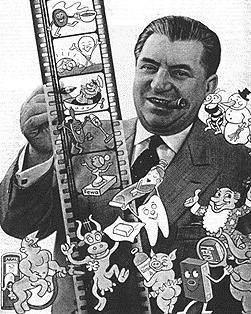
https://www.spiegel.de/international/germany/how-hans-fischerkoesen-transformed-german-animation-a-898814.html
Full Name:Hans Fischer aka "Fischerkoesen"
Occupation / Title:Advertiser, Animator, Cartoonist, Studio Head
Date of birth:18/05/1896
Date of death:23/04/1973
Birthplace:Bad Kösen in eastern Germany
Associated studios:Fischerkoesen Studios
Telematik
UFA Film GmbH
Biography
Hans Fischer was one of the first people to bring an animated film to German cinemas through his 1919 film Das Loch im Westen (The Hole in the West). (Klatt, 2013) “Fisher” was a common surname in Germany, so Fischer adopted the alias “Fischerkoesen” to distinguish himself. The name was created by combining his surname with the name of his birthplace, the town of Bad Kösen in eastern Germany. (Klatt, 2013., Mortiz, 1998., Hans Fisherkoesen, IMDb) He was an influential German animator who contributed both artistically and intellectually to the field from the start of his career in 1919 to his death in 1973. (Klatt, 2013) Considered the “Walt Disney” of Germany, Fischerkoesen had a rich love affair with visual media starting in his childhood years. This passion translated into his career in animation and helped him thrive in the budding German cartoon industry. He was especially well known for his good sense of humor, rhythm, flexible cartoon style, and obsessive concentration towards the medium. (Klatt, 2013; Mortiz, 1998) These traits are prominently displayed in his wartime films: Verwitterte Melodie (Weather-beaten Melody, 1942), Der Schneemann (The Snowman, 1943) and Das dumme Gänslein (The Silly Goose, 1944). (Bendazzi, 2016., Deutsches Film Institut, 2002., Moritz, 1998)
Family and early life
Hans Fischerkoesen was born on May 18th,1896 in Bad Koesen Germany. (Bendazzi, 2016., Klatt, 2013., Mortiz, 1998., Hans Fisherkoesen, IMDb) As a child he suffered from asthma. Due to his health he and his sister, Leni Fischer, were encouraged to focus on stationary creative activities, such as drawing and creating puppet shows. (Deutsches Film Institut, 2002., Mortiz, 1998) These early experiences of isolation and intense creative play inspired a deep love for drawing and narrative development in Fischerkoesen. Fischerkoesen and his sister attended the Leipzig Art Academy together. (Mortiz, 1998) They remained close, with Leni working alongside her brother on many projects throughout their careers.
Sister
Leni Fischer (Animator)
Children
Hans Fischerkoesen (Producer)
Grandchilderen
Alexander Fischerkoesen (Cinematographer)
Stephenie McMillan (Cartoonist & Political activist)
Career outline
Pre World War II
Fischerkoesen was 18 years old when World War I started, but his health kept him off the battlefield. (Klatt, 2013) He instead served as a conscripted signalman on the general staff. (Klatt, 2013., Mortiz,1998) Bearing witness to the horrors of trench warfare radicalized Fisherkoesen and inspired him to create his first film. Fischerkoesen’s hoped to use his film, Das Loch im Westen (The Hole in the West, 1919), to expose the war profiteer as the true cause of war. Fisherkoesen paid the Leipzig movie company 700 marks, which would be around $1,800 United States dollars today, to shoot his footage. (Mortiz, 1998., Inflation Calculator, Alioth Finance) Unfortunately, Fisherkoesen lost the money, as the company was near bankruptcy and they were unable to complete his request. (Mortiz,1998) Fischerkoesen persevered by building his own animation stand and shooting the film himself. Showing, even in the early days of his career, an unstoppable dedication to his craft. A local distributor bought Hole in the West for 3,000 marks, and thus Fischerkoesen’s animation career officially began. (Klatt, 2013., Mortiz, 1998)
World War II
During the Second World War (1939-1945), German media, such as film, radio, theater, and the press, were strictly regulated by the Nazi Propaganda Ministry. (Ministry of Propaganda and Public Enlightenment, Holocaust encyclopedia) The ministry was run by Joseph Goebbels, who worked closely with Hitler and was a leading member in the Nazi party. During the war, many people tried to flee Germany, a feat that became dangerous to accomplish as the Nazis asserted tighter control over the country. (Boldorf, 2021) Many German citizens suffered financially during the depression that preceded the war (1929-1939), including Fischerkoesen. Unemployment rates were high, and there was no social insurance available. (Boldorf, 2021) Fischerkoesen struggled as the products he once advertised became a luxury. (Klatt, 2013) After the Nazi ascent to power, figures in the German media entertainment industry were instructed to participate in Goebbels’ Propaganda Ministry . (Bendazzi, 2016; Moritz, 1998) Both Hitler and Goebbles were fans of animated media and desired to create an entertainment industry that could rival Hollywood. (Bendazzi, 2016) Fischerkoesen was commissioned by Goebbels to create a series of animated films. His new position required Fischerkoesen to move to Potsdam, near the UFA propaganda film studio. (Deutsches Film Institute, 2002; Bendazzi, 2016; Mortiz, 1998)
To date, there is no record of how Fischerkoesen truly felt about the war, or about his participation in it. Mortiz argues that, given Fischerkoesens earlier negative commentary on the nature of war in The Hole in the West, and his humanistic approach in the narratives in his films, it is unlikely that he was a Nazi supporter. (1998) However, this sentiment remains unconvincing and inconclusive among other scholars and with the public. In his essay, “Resistance and subversion in animated films of the Nazi era. The case of Hans Fisherkoesen” in A Reader in Animation Studies, William Mortiz suggests that Fischerkoesen was a member of an underground resistance group of artists during the war years. However, the article “A Peek at the International Section” on the website Animation Resources implies that this was simply a lie Fisherkoesen told after the war in an attempt to escape punishment. (2002) His son, Hans M. Fischerkoesen, also expressed skepticism over this assertion, stating that his father was staunchly apolitical and that he never spoke of the war once it was over. (Klatt, 2013)
During the war,Fischerkoesen produced three films: Verwitterte Melodie (Weather-beaten Melody, 1942), Der Schneemann (The Snowman, 1943) and Das dumme Gänslein (The Silly Goose, 1944). These films were fairytales, designed to compete with Disney and appease Hitler’s appetite for animated media. (Bendazzi, 2016) The films themselves have been described as subversive by American film historian William Moritz: he claims that they carry subtle details, symbols and humanistic elements that contradict Nazis beliefs. (1998) For example, Weather-beaten Melody and The Snowman both focus on empathy, joy, ambiguity of character, and diversity in character design, appearing to challenge Nazi ideals of racial superiority and behavioral hegemony.
Weather-beaten Melody follows the main character, a female bee as she wanders through a sunny meadow. Her character is provided autonomy and depth of character that is rare to find in animated media in the 1940’s. (Mortiz, 1998) The bee’s characterization also goes against Nazi ideals of womanhood, suggesting that women have the ability to pursue their own ambitions and that they too can thrive in leadership positions. A central element of the film is its focus on a record player that has been abandoned. The record player in the film plays Jazz, a form of music that was labeled “degenerate art” by the Nazi party. (Mortiz, 1998., A Peek at the International Section, 2002) The music brings a community of diverse insects together, giving them an opportunity to connect and uniquely express their joy. On a closer viewing, there are also erotic symbols supporting sexual freedom placed within the film, specifically the abandoned clasp from a woman’s garter belt. (Mortiz, 1998) There is also a four-leaf clover growing out of the garter; Fisherkoesen was known for his sense of humour in his works, so this could be a cheeky nod to the owners “good luck”. As Moritz suggests, the autonomy given to the female lead, the friendships of diversity between the creatures, and the forbidden joy the music provides the community, all could be read as subverting Nazi narratives of control and submission.
Fisherkoesens next film, The Snowman follows a similar formula, with a slightly more melancholy emotional undertone. In the film, the audience follows a snowman as he interacts with the other creatures in his environment. (Der Schneemann, 1943) The very beginning of the film a snowflake lands in the shape of a heart on the snowman’s chest, the same area where a Swastika, pink triangle or yellow patch would be placed (Mortiz, 1998) The heart suggests the snowman is having his human emotions placed before his status, as well as making him a caricature for the everyday man. An example of this, Mortiz cites, is how the snowman’s behaviors and actions are mirrored back at him by the creatures he interacts with. A startled dog he laughs at retaliates by biting him. When the snowman falls, a tree laughs at him, angering the snowman. A rabbit attempts to eat the snowman’s nose, inspiring him to take shelter in a wooden cabin. In the cabin he discovers a calendar with pictures of flowers on it, and names of months he’s never seen. He is inspired to visit this place. The snowman climbs into the freezer, and when summer arrives, the cycle repeats.The snowman continues to tease the other creatures around him, but when he finds himself freezing a ladybug, he invites her to use him as a ski-hill instead, providing a positive parallel to his earlier behavior. (Mortiz, 1998) In the end, as the snowman melts, he sings ”How lovely summer is; my heart breaks from happiness,” and the rabbit comes to eat his nose. Moritz believes the animals and the snowman are examples of everyday people, both the good and the bad. In his read, he found the short to be touchingly humanistic.
Fisherkoesen’s last wartime film, The Silly Goose, aligned closer to Nazi ideals, with the villain of the movie, a fox, who is introduced with the Yiddish song “Bei mir bist Du scheen.” (Bendazzi 2016) The story follows the life of a self-centered female goose who forgoes her mother’s teaching, and steals from the other barn animals, to pursue a life of indulgence in the city. The main character, the female goose, is punished for her choices, as she is almost captured by the fox, who wishes to imprison her in his sweatshop. In the end she comes home and the barn animals rally around her to free the creatures captured by the fox. (Bendazzi., Mortiz, 1998., A Peek at the International Section, 2002) In Animation : A World History Giannalberto Bendazzi and A Peek at the International Section by Animation Resources, highlights the antisemitic nature of this film, and its glorification of the Nazi ideals of gender roles and cultural authority. (2016., 2002)
Neither Mortiz or Bendazzi’s reading of Fischerkoesen’s wartime films does not concretely suggest the animator’s position on the politics of the time, nor do they discuss in detail any pressure placed on Fischeroesen to produce antisemitic propaganda ostensibly for children.
Post war Creations
After the war Russian troops arrested Fischerkoesen as a possible Nazi collaborator. (Klatt, 2023., Mortiz, 1998) He was placed in the Sachsenhausen concentration camp for three years before he was released. During his time in the camp, he continued to practice his medium, as always, using his art to cope with and comment on topical events in his life. The wall paintings he created were placed in the kitchen where he was placed to work. They were allegorical, depicting his experiences through the lens of humanized vegetables, specifically carrots and parsnips. (Klatt, 2023., Mortiz, 1998) The work depicts the parsnips exerting control over the carrots, despite their familial relation. All of the vegetables participate in self-destructive behaviors by peeling their skin off and jumping into boiling water. These wall murals are now preserved as a national historical monument. (Mortiz, 1998) Later that year, in 1948, Fischerkoesen and his family escaped from East Germany to the west; he then reestablished his animation studio, Fischerkoesen Studios, in Mehlem. He continued to create commercials until his retirement and quickly regained the success he had found before the war. (Klatt, 2013., ; Mortiz, 1998., ; Deutsches Film Institut, 2002)
In the 1960’s Fischerkoesen bought a large house in county Limerick in mid–west Ireland. (Yvonne, 2024) He turned this house into his Irish film studio, where he spent time providing training and employment to Irish art students from the Limerick School of Art and Design. He contributed greatly to the culture of Irish animation; however, he receives little credit as his name has been lost to time, at least in Irish history. The Fischerkoesen studio was managed by German filmmaker Gunther Wulff, who was the face of the operation and likely impacted how Fischerkoesen’s presence got remembered.
In the mid-1960’s modern inventions such as the TV demanded increasingly short and snappier messaging in advertisements. This new movement left no room for Fischerkoesen’s slower, narrative-driven style, so he chose to retire. (Klatt, 2013., Mortiz, 1998., Deutsches Film Institut, 2002) Retiring officially in 1969, Fischerkoesen passed the animation studio on to his son. (Klatt, 2013) However, even in retirement Fischerkoesen’s passion for animation and entertainment never ceased. Fisherkoesen also established a new company, Telematik, where he thought to realize a new vision, a new robotic form of puppet theater that would work in the medium of television (Klatt, 2013) Unfortunately, Fischerkoesen died in 1973, before he could finalize this new concept. His legacy lived on in his son, who successfully ran his studio until the 2000s when it was shut down. (Klatt, 2013)
Personal style
Hans Fischerkoesen’s work was known for having a sense of humor, a good sense of rhythm, and a charming, flexible cartoon style. (Klatt, 2013) Fischerkoesen was also known for his dedication, a willingness to experiment, and an intense ability to concentrate on his work, all of which aided him in his animation career. (Klatt, 2013., Mortiz, 1998) He also philosophized about advertising and implemented the “if-then” formula (If you use this product, then this will happen; if you have this problem, then this product will help) into his work, which proved to be a successful theory. (Mortiz, 1998) Hans Fischerkoesen’s work is also highly acclaimed due to its advanced “three-dimensional” effects. These effects were created to compete with the Fleischers Brothers’ Stereo-Optical process (which combined model sets with cel animation) and Disney’s multiplane camera (which filmed through several layers of cels). (Bendazzi, 2016., Mortiz, 1998)
Influences
Julias Pinschewer (Bendazzi, 2016., Klatt, 2013., Mortiz, 1998)
Lotte Reiniger (Mortiz, 1998)
Oskar Fischinger Muratti Gets in the Act. (Mortiz, 1998)
Honors and awards
Fischerkoesen won major prizes at commercial film festivals in Rome, Milan, Venice, Monte Carlo, and Cannes. (Mortiz, 1998)
He also appeared on the cover of the prestigious Der Spiegel in their 1931 article “Watch out, Mickey Mouse, Felix the Cat, and Co.!” (Klatt, 2013., Mortiz, 1998)
Fischerkoesen won both first and second prizes at a Dutch-sponsored international competition for advertising films (1937). (Klatt, 2013., Mortiz, 1998)
Filmography
[Show/Hide]
References:
“RefPack048: A Peek at the International Section.” Animation Resources, 10 Nov. 2022, https://animationresources.org/refpack048-a-peek-at-the-international-section/.
Bendazzi, Giannalberto. Animation : A World History. Focal Press, 2016. Pp. 294-299
Boldorf, Marcel. “Post-war Economies (Germany).” International Encyclopedia of the First World War. 2021. https://encyclopedia.1914-1918-online.net/article/post-war-economies-germany/
Deutsches Film Institut. “Hans Fischerkoesen” Internet Archive WaybackMachine. 2002 https://web.archive.org/web/20040223034527/http://www.deutsches-filminstitut.de/dt2tp0089.htm
“Hans Fischerkoesen Biography”IMDb. NA.
https://www.imdb.com/name/nm0279179/bio/?ref_=nm_ov_bio_sm
Hennessy, Yvonne. “A Collective Effort: Irish Animation Studios.” Animation Studies 2.0, 1 May 2024, https://blog.animationstudies.org/a-collective-effort-irish-animation-studios/
$84 in 1918 → 2026 | Inflation Calculator.” In2013Dollars.com, Alioth Finance, n.d., https://www.in2013dollars.com/us/inflation/1918?amount=84.
Klatt, Von. “The Life of Germany’s Own Walt Disney.” spiegel international. 2013.
Mortiz, William. “Resistance and subversion in animated films of the Nazi era. The case of Hans Fisherkoesen” A Reader in Animation Studies, edited by Jayne Pilling, John Libbey & Company, Limited, 1998,292-331.
United States Holocaust Memorial Museum. Ministry of Propaganda and Public Enlightenment. Holocaust encyclopedia. https://encyclopedia.ushmm.org/content/en/article/ministry-of-propaganda-and-public-enlightenment